
Rainy Season Bathroom Guide
Every rainy season, the same problem resurfaces in many homes.Floor tiles feel slipperier than usual, and every corner seems to take noticeably longer to dry. This isn't simply a cleaning issue — it comes down to the materials and fixtures chosen in the first place. Get those choices right, and your bathroom can handle the rainy season with ease, without constant troubleshooting month after month.
Why Bathrooms Require Special Considerations During the Rainy Season
Higher relative humidity during the rainy season means surfaces take much longer to dry than usual. Water that lingers in tile grout lines, around fixture edges, or in waterproof sealant becomes an easy breeding ground for bacteria and mold. When ventilation is poor, that moisture simply circulates within an enclosed space, allowing odors to build up faster than at any other time of year. A real solution has to address three factors together: a fixture surface that resists bacterial buildup, ventilation that actually works, and flooring that's both moisture-resistant and slip-resistant.

Antibacterial Glazes on Sanitaryware: The Invisible Difference Maker
One technology that tackles odor at the source is a special surface glaze applied directly to sanitaryware. A well-known example is TOTO's CEFIONTECT — a nano-level ceramic glaze fired into the ceramic during manufacturing rather than applied as a later coating. This results in a surface far smoother than standard sanitaryware, making it significantly harder for bacteria and mold to take hold. At a microscopic level, there are simply no grooves left for dirt and moisture to seep into and turn into odor.
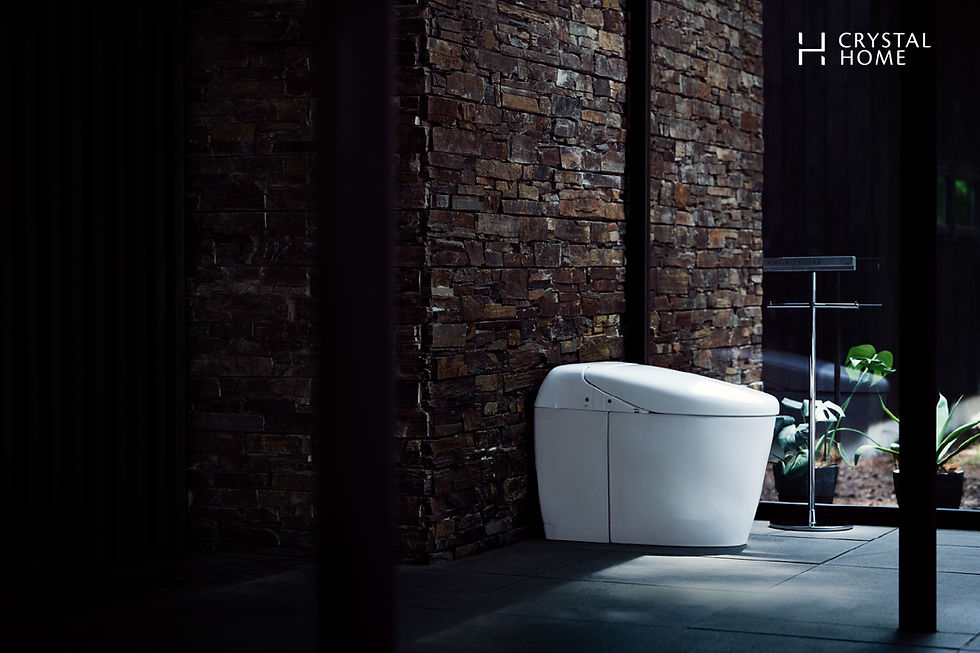
Villeroy & Boch takes a similar approach with its AntiBac glaze, which embeds silver ions into the ceramic surface during the firing process rather than coating it afterward. This inhibits bacterial growth by more than 99.9% and maintains its effectiveness for the entire lifespan of the fixture. Choosing sanitaryware with this type of glaze reduces how often heavy scrubbing is needed and lowers the risk of odor buildup during periods of high humidity.
Ventilation: The Heart of the Matter Most Homes Overlook
No matter how good your fixtures are, moisture will still accumulate if the bathroom has no way to let humid air escape. At minimum, every bathroom should have an exhaust fan sized appropriately for the room, with ducting that vents straight outside the building — not one that simply recirculates air within the ceiling cavity. If your bathroom has a window, open it to let air flow through after every shower; even a few minutes makes a real difference. For windowless bathrooms, installing a small dehumidifier or a humidity-sensing exhaust fan that switches on automatically once moisture levels cross a set threshold offers an effective, long-term way to keep odor problems in check.
Slip-Resistant Flooring: Safety That Goes Hand-in-Hand with Moisture Resistance
Rainy season is when bathroom floors get wet easily and stay wet longer than usual, so choosing tiles with a proper slip-resistance rating for wet areas — commonly referred to as an R-rating — matters just as much as appearance. In simple terms, this rating tells you how well a tile grips the floor when wet: the higher the rating, the less slippery it is. Tiles with a fine textured or semi-matte surface generally grip better when wet than smooth, glossy finishes. Beyond the tile itself, grout should be a waterproof, mold-resistant type, since grout lines are one of the most common spots for moisture — and odor — to accumulate.
Crystal Home Tip:
Before replacing fixtures or flooring, take stock of the dampest spots in your current bathroom first — areas that never see direct sunlight, or spots your exhaust fan doesn't quite reach — and start solving the problem there. This targeted approach leads to better fixture and material choices than overhauling the entire bathroom without a clear direction.
Conclusion
This rainy season doesn't have to mean musty odors and slippery floors. Address all three root causes together, and the problem largely takes care of itself. If you're looking for sanitaryware or tiles suited to our climate, the Crystal Home team is on hand to help you choose options that genuinely fit how you live. Reach out via LINE @crystalhomebkk, or visit our showroom to see the products in person.
Frequently Asked Questions
Does an antibacterial glaze really help reduce odor?
It helps significantly when it comes to bacterial buildup on the fixture's surface, but good ventilation still matters just as much, since part of the odor problem comes from humidity in the air itself, not just the fixture surface.
Does a bathroom without a window really need an exhaust fan?
Yes, absolutely — it's the only way to actually remove humid air from the room. Choose a model with sufficient suction power for the room size, and make sure it ducts straight outside the building.
Is the difference between slip-resistant and glossy tiles just about looks?
No — the main difference is grip when wet. Glossy tiles tend to become slippery more easily once water hits them, making them better suited to dry areas than to bathrooms.

